
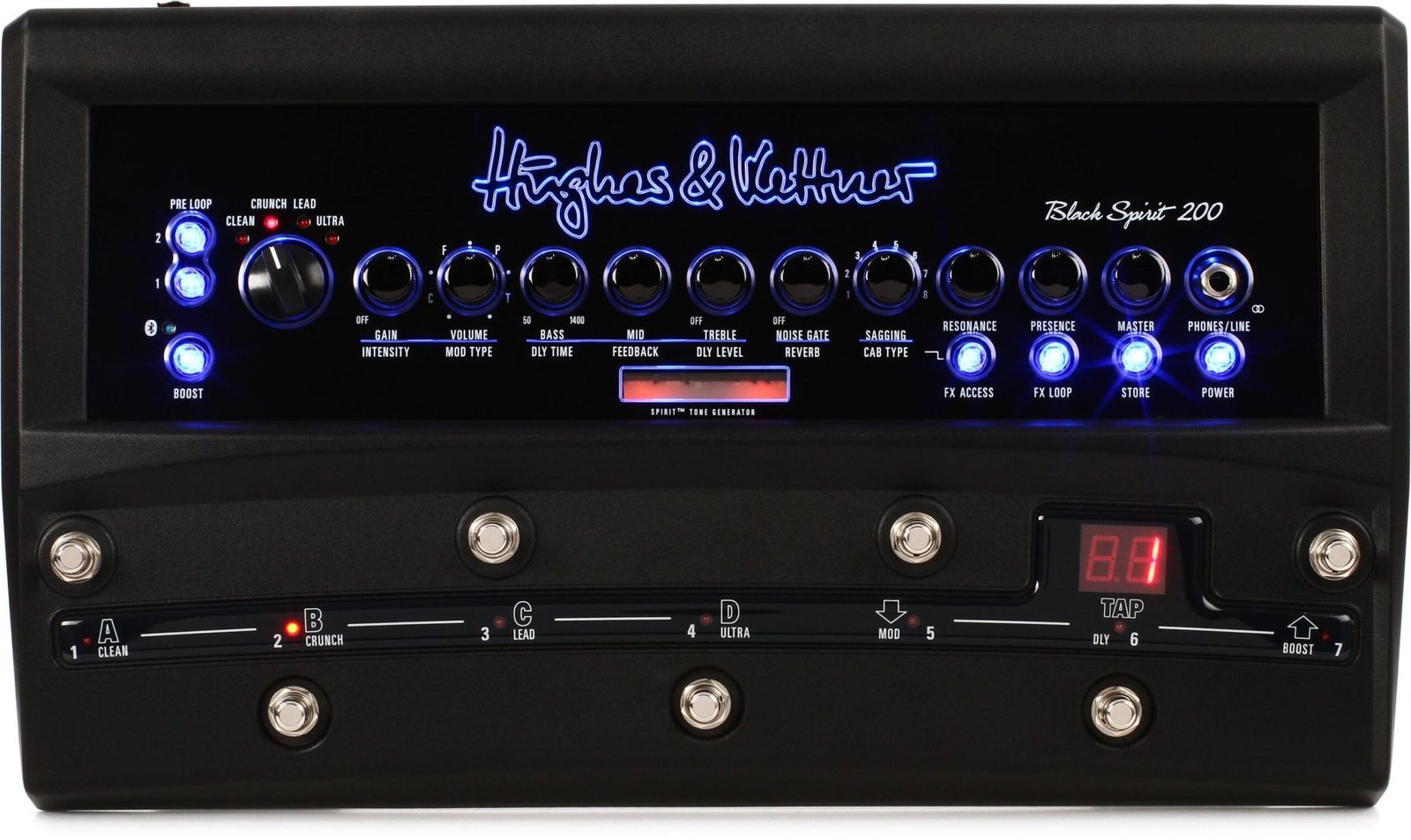
A compact floor amplifier can appeal to guitarists who want several tones and effects in one unit without building a large rack or pedalboard. The Hughes & Kettner Spirit 200 Floor is designed around that all-in-one approach, combining amplifier controls, onboard effects, cabinet simulation, and connections for a stage or home setup. Choosing it still requires more than checking the headline power rating: players should consider the amp’s sound, speaker or cabinet compatibility, control workflow, recording options, and the practical needs of their own rig. This guide walks through those points to help musicians decide whether the Spirit 200 Floor fits the way they play.
Understanding the Control Layout
Before a live performance, spend time learning how the channel, gain, volume, EQ, presence, resonance, noise gate, and effects parameters are stored. A programmable system can make a rig more repeatable, but a player must know which controls are global and which are saved to a preset. Label presets in a way that makes sense under stage lighting and keep backup settings for the sounds used most often.
Matching the Amp to a Cabinet
Power amplifiers and speaker cabinets must be matched according to impedance and power handling. Verify the cabinet’s rated impedance and the amp’s supported output before connecting anything. Use proper speaker cable for speaker connections rather than assuming an instrument cable is suitable. If you are unsure, refer to the manual or a qualified technician. Incorrect connections can damage equipment and may create a safety hazard.
Practice and Recording Workflow
For recording, compare the Red Box AE+ output with a miked cabinet and with any available direct monitoring option. Check levels at the interface or console and listen for clipping, noise, and differences in cabinet voicing. For rehearsals, save a practical set of presets and test transitions at performance volume rather than relying only on headphones or low-volume practice.
People searching for this topic need a clear explanation that separates verified information from assumptions. This guide focuses on practical details, gives readers a way to check claims, and explains the main decisions to make before taking action.
Background and Context
Start with the core facts and the terminology used by reliable sources. Different providers, products, locations, and circumstances can change the answer, so readers should compare like with like. A headline or short listing rarely contains enough information to support a final decision.
Practical Considerations
Consider the intended use, the condition or requirements involved, the total cost, and the consequences of making the wrong choice. Record the details that matter, ask direct questions, and keep the relevant documentation. When the decision involves health, law, finance, or safety, confirm current rules with an appropriate professional or official source.
Common Questions and Mistakes
Do not rely on a single informal comment when the official documentation is available. Check the date of the information, confirm exact model or product identifiers, and distinguish a general statement from a rule that applies to a specific person or situation. If a detail cannot be verified, treat it as unknown rather than filling the gap with a guess.
Making an Informed Decision
A useful comparison has consistent criteria. Check the same specifications, prices, terms, dates, or requirements for each option. Consider ongoing costs and practical constraints as well as the immediate benefit. Keep enough flexibility to change course if new verified information becomes available.
Readers should use this guide as a starting point and consult the linked primary references for updates. Details can change after publication, particularly pricing, availability, product support, operating hours, travel schedules, and government guidance.
Choosing a Rig for Live Performance
A programmable floor amplifier can simplify a stage setup, but the player should rehearse with the complete signal chain. Test the guitar, pedals, amp, cabinet, and PA together. Listen from the audience position as well as next to the speaker. The sound that seems bright or full on stage may translate differently through a front-of-house system. Save levels consistently so that changing a preset does not create an unexpected jump in volume.
Preset Organization and Reliability
Organize presets around a small set of practical needs rather than creating dozens of nearly identical sounds. For example, set one clean tone, one edge-of-breakup sound, one rhythm gain sound, and one lead sound, then make controlled variations. Keep notes for the preset number and the guitar or tuning it was designed for. If the unit supports backup or MIDI program changes, learn that workflow before a show rather than on stage.
Pedals and Loop Placement
Some effects work best before the preamp, while time-based effects may be placed in the effects loop. The exact result depends on the pedal and the sound being created. The additional loops on the floor unit provide routing flexibility, but users should read the manual to understand the signal path and switching behavior. Test for level mismatches, noise, and unwanted changes when a loop is engaged or bypassed.
Direct Recording and PA Use
A direct output with cabinet emulation can reduce microphone and cabinet setup in a recording room or live venue. Check input sensitivity at the console or interface and leave headroom to prevent clipping. Compare different cabinet emulations using the same playing passage and level so the test is fair. Keep in mind that a cabinet simulation is a tonal model; it does not reproduce every room, microphone, or speaker interaction.
Questions About Power and Speakers
Before connecting a passive cabinet, confirm the correct speaker output, impedance, and power-handling requirements. The power soak settings should be used only as described in the official manual. Do not connect a speaker output to an instrument-level input unless the manufacturer specifically identifies a suitable connection. Use the correct cable and avoid changing speaker connections while the amp is powered unless the instructions explicitly permit it.
Choosing Between the Floor and Head Versions
The floor version puts control and switching on the floor, which may be convenient for players who want fewer separate control devices. A conventional head may fit a different setup, especially for musicians who already use a dedicated pedalboard and prefer rack or amp-based switching. Compare the physical footprint, control layout, connections, transport needs, and total system cost rather than assuming the floor version is automatically more convenient.
Buying and Support Checklist
Confirm the exact model variant and current manual. Check the condition of footswitches, knobs, jacks, display, power supply, and chassis. Ask whether the seller includes the original packaging and any required accessories. For a used purchase, test every channel and preset, then test the direct output and loops. Confirm local service availability and warranty terms before paying.
More FAQs
Can the unit replace an entire pedalboard?
It may replace some pedals because it includes effects and programmable switching, but players with specialized effects may still need external pedals. Compare your required signal chain with the available loops and effects.
Is a 200-watt rating always too loud for home use?
The unit lists selectable power options, but the right configuration depends on the cabinet, room, and manual guidance. Do not assume the wattage alone predicts perceived loudness or safety.
Should I buy without hearing it?
For a complex amp system, a demonstration is preferable. If buying online, review the return policy and ask for a clear condition report and a video showing the controls and outputs working.
How to Build a Simple Preset Library
Begin with a small number of sounds that cover the music you play most often. Save a clean foundation, a slightly driven rhythm tone, a higher-gain rhythm tone, and a lead sound. Keep the output level consistent between presets before adding effects. Name or record each preset by song or function, and note any differences in guitar pickup or tuning. A simple library is easier to use under stage pressure than a long list of similar variations.
Rehearsing With the Full Band
Test the amplifier with drums, bass, and other instruments in the room. A sound that seems large when playing alone may become muddy in a full mix. Adjust low and mid frequencies so that the guitar has space without masking vocals or bass. If the amp is connected directly to a PA, work with the sound engineer to establish a consistent input level and monitor mix. Check the stage volume and front-of-house sound separately.
Transport and Physical Setup
The floor format can make access to controls straightforward, but players should still protect knobs, switches, and connectors during transport. Use a suitable case or padded bag, secure cables, and avoid storing heavy equipment on top of the unit. At setup, position the amplifier so that it cannot be stepped on or struck by stands. Keep the power cable clear of walkways and inspect it before each performance.
Firmware, Documentation, and Service
Check the manufacturer’s current support page for manuals, software or firmware information, and service contacts. Keep a copy of the manual with the rig or on an accessible device. If a preset behaves unexpectedly after a reset or update, consult the official documentation before changing multiple settings at once. For a used product, confirm that the unit can be restored to a known baseline and that the seller has disclosed any faults.
How to Decide Whether the Price Is Fair
Compare the asking price with recent listings for the same model and condition, not with the price of a different Black Spirit product. Include required accessories, case, shipping, tax, and any service needs. A lower used price may be less attractive if switches are worn or the power supply is missing. A new unit with a clear warranty may have greater value for a touring player who depends on reliable equipment.
Frequently Asked Questions
What is the Hughes & Kettner Spirit 200 Floor?
It is a floor-format guitar amplifier in the Black Spirit 200 family, combining amp channels and performance features in a compact unit intended for stage and studio use.
How powerful is the Spirit 200 Floor?
The model is associated with a 200-watt power amp. Actual output and speaker compatibility depend on the manufacturer’s stated load and operating requirements, so consult the manual.
Does it include effects?
The product is described as having built-in effects and programmable features. Check the current manual for the full list, control behavior, and preset functions.
What is Red Box AE+?
Red Box AE+ is Hughes & Kettner’s speaker-emulation technology for sending a cabinet-style signal to recording or front-of-house equipment. Confirm routing options in the model documentation.
What should I check when buying it used?
Test every channel, switch, control, output, and connection. Check for noise, intermittent operation, physical damage, included accessories, and service history.
Conclusion
The Hughes & Kettner Spirit 200 Floor is worth considering for guitarists who want a flexible floor-based amplifier with substantial power, channel options, effects, and direct-output features. The right choice depends on your speaker setup, routing needs, preferred tones, and workflow. Review the official manual, test the controls, and compare condition and support before purchasing.
