
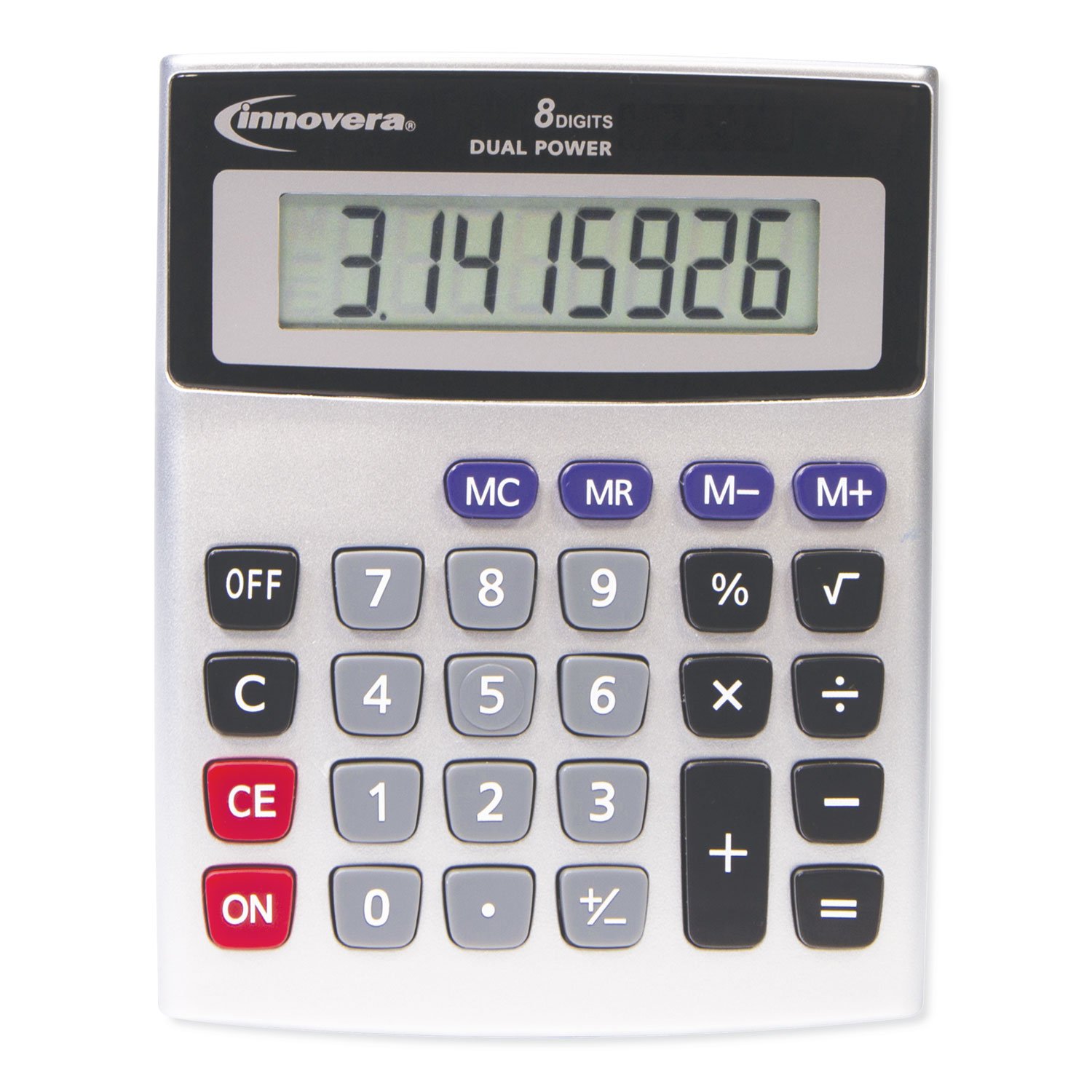
A desktop calculator remains useful for quick arithmetic at a reception desk, in a classroom, or beside an invoice and spreadsheet. The Innovera 15927 is listed as a dual-power model, pairing a solar cell with battery power and offering an eight-digit display for routine calculations. Those features may suit everyday office tasks, but the right purchase also depends on screen readability, key layout, memory functions, size, and warranty support. This guide explains the model’s stated specifications, identifies the work it can reasonably handle, and lists the details to verify with a supplier before ordering.
Care, Cleaning, and Storage
Keep the calculator dry and free from dust, spilled drinks, and direct heat. Use a soft, dry cloth to clean the case and display. Do not use solvents or spray cleaners directly on the keys. If the display becomes faint, check whether lighting conditions are sufficient for the solar cell and review the battery instructions. Remove or replace a battery only as the manufacturer or seller directs.
When to Choose a Different Calculator
If you routinely work with tax, loan payments, amortization, statistics, trigonometry, or long numerical expressions, choose a financial or scientific model with the functions you need. If the calculator is used for accounting records, keep the transaction in your accounting system as well; a desktop calculator is a convenience tool, not a permanent record of a business transaction.
Buying for an Office or Classroom
For multiple units, ask the supplier whether all calculators are the same model and whether bulk orders include consistent warranty coverage. Check that the display and keys are comfortable for the people who will use them. Keep spare batteries if the model requires them, and document who is responsible for replacing consumables.
People searching for this topic need a clear explanation that separates verified information from assumptions. This guide focuses on practical details, gives readers a way to check claims, and explains the main decisions to make before taking action.
Background and Context
Start with the core facts and the terminology used by reliable sources. Different providers, products, locations, and circumstances can change the answer, so readers should compare like with like. A headline or short listing rarely contains enough information to support a final decision.
Practical Considerations
Consider the intended use, the condition or requirements involved, the total cost, and the consequences of making the wrong choice. Record the details that matter, ask direct questions, and keep the relevant documentation. When the decision involves health, law, finance, or safety, confirm current rules with an appropriate professional or official source.
Common Questions and Mistakes
Do not rely on a single informal comment when the official documentation is available. Check the date of the information, confirm exact model or product identifiers, and distinguish a general statement from a rule that applies to a specific person or situation. If a detail cannot be verified, treat it as unknown rather than filling the gap with a guess.
Making an Informed Decision
A useful comparison has consistent criteria. Check the same specifications, prices, terms, dates, or requirements for each option. Consider ongoing costs and practical constraints as well as the immediate benefit. Keep enough flexibility to change course if new verified information becomes available.
Readers should use this guide as a starting point and consult the linked primary references for updates. Details can change after publication, particularly pricing, availability, product support, operating hours, travel schedules, and government guidance.
Keypad Layout and Calculation Habits
Before relying on a desktop calculator for daily work, become familiar with the key layout. The memory keys, clear keys, percent key, sign-change key, decimal point, and square-root symbol may be arranged differently from those on another calculator. Run a few sample calculations and check the result with a second method. This is especially important when a calculation affects a customer invoice, a cash total, or a business record.
Using Memory for Multi-Step Totals
Memory can reduce repeated typing when several figures need to be combined. A typical memory workflow stores a subtotal, adds or subtracts additional values, and recalls the result. The exact key behavior varies by model. Read the key labels and test with simple figures before using the feature on a live transaction. Clear memory between unrelated calculations so an old subtotal does not affect a new result.
Limitations of an Eight-Digit Display
An 8-digit display is adequate for many everyday amounts but can be restrictive for large quantities or calculations that generate long decimal results. If the display overflows or rounds a value, do not assume the visible digits represent the full precision required. Choose a calculator with more digits or a dedicated function set when the work demands it. For accounting, keep source documents and use appropriate software to record final figures.
Solar Power and Battery Care
Dual-power calculators are convenient because they can operate using light while retaining a battery source. Still, avoid leaving the calculator in direct heat or sunlight for extended periods. If the device behaves inconsistently, check whether the battery is depleted and whether the solar cell is blocked. Follow the seller or manufacturer instructions for battery replacement and disposal. Do not open the case or attempt electrical repairs unless qualified.
Choosing an Alternative Model
If model 15927 is unavailable, compare other desk calculators by display size, key spacing, power source, memory functions, angle of the screen, battery replacement, and warranty. If you need a printer, a tax key, or business-specific calculations, make those requirements part of the shortlist. Avoid assuming that another Innovera model has the same layout or specifications simply because its name is similar.
Buying Multiple Units
For an office or classroom, evaluate whether the model is comfortable for different users. Order a sample before buying a large quantity, confirm the supplier’s replacement policy, and ask whether the units are new, refurbished, or clearance stock. Keep the packaging and invoice until the devices have been tested. If the model is discontinued, consider whether replacement batteries or service will remain easy to obtain.
Additional FAQs
Can it calculate percentages for discounts?
Listings show a percent key, which is commonly used for basic percentage calculations. Verify the exact sequence and result on the device before using it for business pricing.
Does dual power mean no battery is ever needed?
No. The solar cell depends on sufficient light, and the device may still use a battery. Check the model’s instructions for its power design.
Is it suitable for bookkeeping?
It can help calculate totals, but it does not store a permanent transaction ledger. Keep invoices and enter final transactions into suitable accounting records.
Checking the Calculator Before Everyday Use
When the device is delivered, inspect the screen for missing segments and the case for cracks. Press each key once to ensure that it responds consistently and is not stuck. Test arithmetic, percent, sign change, and memory using figures you can verify by hand. Check whether the calculator remains stable on the desk and whether the display is easy to read from your normal working position. Keep the receipt in case the item is defective on arrival.
Why Basic Arithmetic Still Needs Verification
Calculators are useful, but incorrect key entry can still produce a convincing number. For important transactions, repeat the calculation or verify it with a spreadsheet or another device. Confirm decimal placement and sign before recording a result. If a customer disputes a total, work through the figures calmly rather than relying only on the displayed answer.
Display and Ergonomics
Desk calculators are often used repeatedly throughout the day. Consider whether the keys are large enough, whether the spacing suits the user’s hand, and whether the display angle works under the room’s lighting. A device that is technically capable but uncomfortable may slow routine work. Ask the intended user to test the keypad before purchasing multiple units for an office.
Battery Disposal and Product End of Life
If the calculator uses a replaceable battery, follow the product instructions and local battery-disposal guidance. Do not dispose of batteries in fire or leave them loose where children can reach them. When the unit reaches the end of its useful life, check local electronic-waste collection options. A discontinued model may be harder to repair, so consider long-term support when choosing a replacement.
Comparing the 15927 With Current Desk Calculators
Compare display count, power source, memory, key layout, screen angle, size, warranty, and current stock. If another calculator offers similar functions at a lower price, confirm the build quality and seller support before deciding. For a business that needs frequent totals or tax calculations, a model with dedicated functions may be more efficient. Choose based on real workflow needs rather than on a similar model number or an attractive product image.
Understanding the Difference Between Display and Calculation Precision
The number of digits shown on the screen is not a complete measure of a calculator’s internal precision. Basic desk calculators may round displayed results or handle chained operations differently from a spreadsheet or scientific calculator. For routine totals this may be acceptable, but a financial report or technical measurement may require more precision. When exact rounding rules matter, follow the relevant business or accounting procedure and verify the final result with an appropriate tool.
Teaching Calculator Use in a Classroom
A simple desktop calculator can help students practice arithmetic, percentages, and number checking. Teachers should explain the order of operations and why entering a sequence in the wrong order can change the result. Ask students to estimate an answer before using the calculator, then compare the displayed value with the estimate. This makes the device a tool for checking reasoning rather than a replacement for understanding.
Supplier and Stock Questions
For a potentially discontinued model, ask the supplier whether the item is current stock, old inventory, or a substitute listing. Confirm that the carton and device show the same model number. If the seller proposes an alternative, request the alternative’s specification sheet before agreeing to the change. A product title on a marketplace is not enough to establish that the shipped calculator is the 15927.
Frequently Asked Questions
What does dual power mean on the Innovera 15927?
Dual power generally means the calculator can use solar energy and a battery. Confirm the exact power arrangement and battery type from the product label or manual.
How many digits does the Innovera 15927 display?
Listings for this model describe an eight-digit display. Verify the specification on the packaging or the supplier’s current product sheet before purchasing.
Is it suitable for everyday office work?
A desktop calculator of this type can handle routine arithmetic and common office calculations. Check that its display size, keys, memory functions, and operations match your workflow.
What should I check before ordering?
Confirm the model number, condition, included battery if applicable, return policy, warranty, and whether the seller is shipping the exact 15927 rather than a similar calculator.
What if the model is unavailable?
Ask the supplier for a proposed replacement’s specification sheet. Compare display, power source, key layout, memory functions, dimensions, and warranty before accepting a substitute.
Conclusion
The Innovera 15927 desktop calculator may be a practical option for routine desk, classroom, or office calculations when its features match the user’s needs. Since listings and availability can vary, verify the exact model, display, dual-power arrangement, functions, condition, and seller terms before ordering. Compare any substitute by specification rather than appearance or title alone.
