
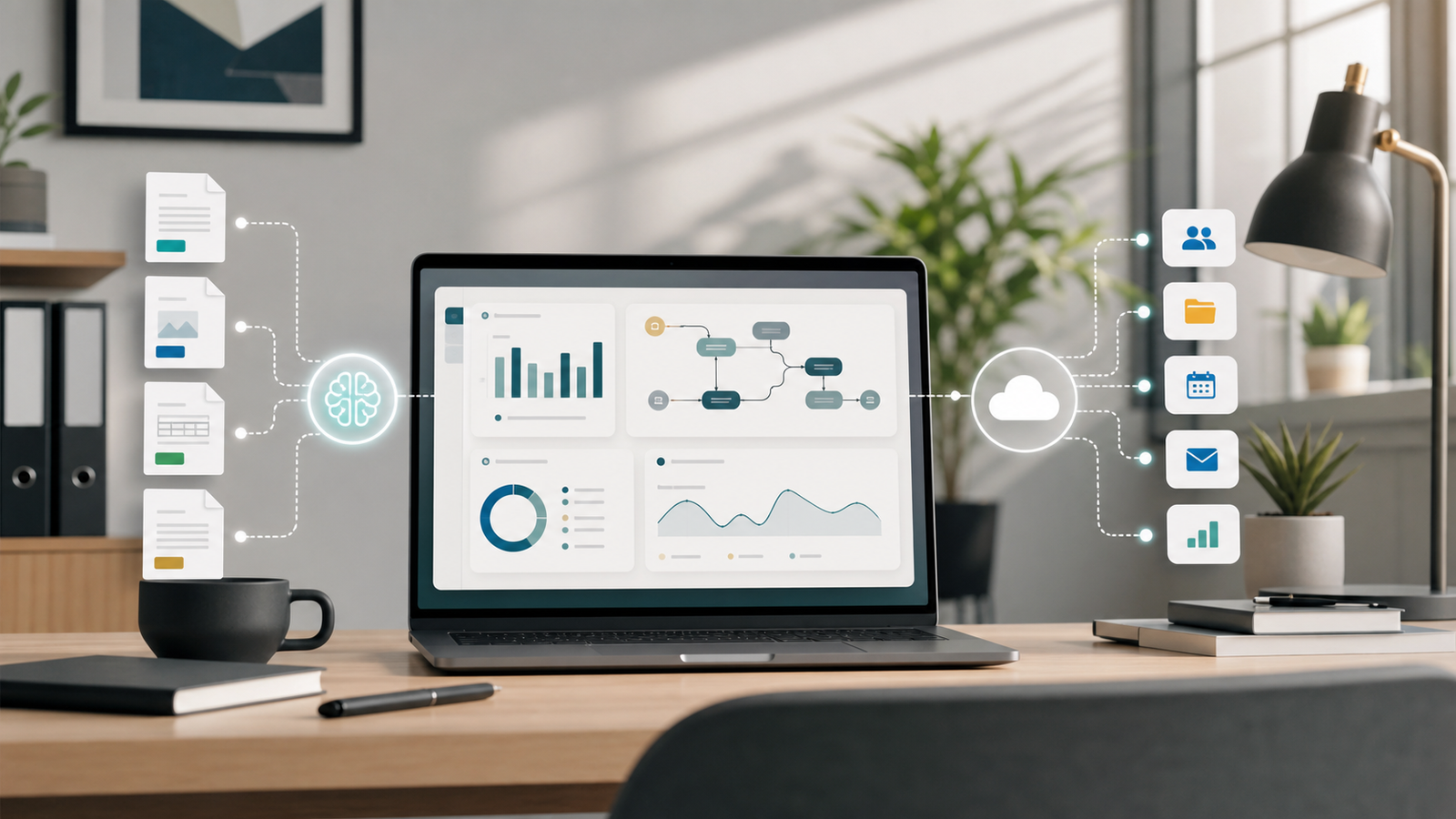
AI automation is becoming a practical consideration for US companies looking to reduce repetitive work, improve response times, and connect the software they already use. But a search for “Droven IO AI automation” can create confusion: Droven.io is described as an educational publication about AI and digital transformation, rather than an automation platform that businesses can subscribe to. Understanding that distinction is the first step before evaluating any tool or vendor. This guide explains the terminology, outlines realistic workflow examples, and shows how an organization can assess security, implementation effort, human oversight, and return on investment before introducing automation.
Questions to Ask Before an Automation Project
Before an organization signs a contract, it should identify the system owner, technical owner, process owner, and person responsible for monitoring quality. Ask what happens when an API changes, a model response is unavailable, a customer record is incomplete, or an output falls outside the approved range. Request a clear description of the vendor’s support hours, service-level commitments, data export options, and incident notification process. A good implementation plan explains how the team can pause automation, reverse an action where possible, and return to a manual workflow.
How to Measure Return on Investment
Calculate the time saved per case, but subtract review time, exception handling, software fees, integration work, and ongoing maintenance. Also measure error costs and customer impact. An automated process that handles 80 percent of cases quickly but creates expensive errors in the remaining 20 percent may not be a positive investment. Revisit the business case after the pilot and at regular intervals.
Implementation Checklist
Document who may access the system, which data is allowed, which actions require approval, how logs are retained, and who reviews unusual results. Train users on limitations, not just buttons and prompts. Set a review date to decide whether the pilot should be expanded, changed, or stopped.
People searching for this topic need a clear explanation that separates verified information from assumptions. This guide focuses on practical details, gives readers a way to check claims, and explains the main decisions to make before taking action.
Background and Context
Start with the core facts and the terminology used by reliable sources. Different providers, products, locations, and circumstances can change the answer, so readers should compare like with like. A headline or short listing rarely contains enough information to support a final decision.
Practical Considerations
Consider the intended use, the condition or requirements involved, the total cost, and the consequences of making the wrong choice. Record the details that matter, ask direct questions, and keep the relevant documentation. When the decision involves health, law, finance, or safety, confirm current rules with an appropriate professional or official source.
Common Questions and Mistakes
Do not rely on a single informal comment when the official documentation is available. Check the date of the information, confirm exact model or product identifiers, and distinguish a general statement from a rule that applies to a specific person or situation. If a detail cannot be verified, treat it as unknown rather than filling the gap with a guess.
Making an Informed Decision
A useful comparison has consistent criteria. Check the same specifications, prices, terms, dates, or requirements for each option. Consider ongoing costs and practical constraints as well as the immediate benefit. Keep enough flexibility to change course if new verified information becomes available.
Readers should use this guide as a starting point and consult the linked primary references for updates. Details can change after publication, particularly pricing, availability, product support, operating hours, travel schedules, and government guidance.
Which Workflows Are Suitable for AI Assistance?
Start with tasks that involve sorting, summarizing, extracting, or drafting information. These are common places where a model can support a human without being given authority to make an irreversible decision. A support team might ask a system to label a message by topic and urgency, then allow a trained employee to confirm the classification. An accounts team might extract invoice fields into a review queue while a person checks the supplier, amount, and due date. A knowledge team might retrieve policy passages and draft a response that cites the underlying document. Each workflow needs a defined input, output, and review rule.
When conventional automation is the better fit
Use ordinary rules when the steps are predictable and the input is structured. Transferring a value from one approved form field to another, sending a receipt after a payment event, or notifying a manager when a date is reached does not require a generative model. A simple workflow is often cheaper, easier to test, and easier to explain. AI should solve a real interpretation problem, not be added just because a vendor uses the label.
Compare Common Tool Categories
No single category is best for every process. Integration platforms connect common business applications and move data between them. Robotic process automation can interact with user interfaces when a system has no suitable integration, although interface changes can break a bot. Document-processing systems specialize in recognizing and extracting fields from files. AI assistants can interpret language and draft outputs, while custom applications combine models with a business’s approved data and software. Compare products by the task they perform, not by a list of fashionable features.
Governance for a US Business
Before a pilot, identify whether the workflow handles personal information, financial records, health information, education records, confidential company data, or information belonging to children. The legal obligations depend on the industry, data, state, and use case. A vendor’s security page is only a starting point. Review the contract, privacy terms, data processing arrangements, retention period, breach process, access controls, and the ability to delete or export information. Ask counsel or the responsible compliance officer where regulated data is involved.
Write a clear rule for human approval. For example, the system may prepare a draft refund recommendation, but an authorized employee must approve the refund. It may summarize an application, but it must not decide eligibility unless the organization has validated that use and established appropriate controls. Store enough logs to investigate a disputed result without keeping sensitive material longer than necessary.
Run a Meaningful Pilot
Choose a narrow use case that occurs often enough to measure. Capture a baseline for processing time, error rate, exceptions, employee effort, and customer impact. During the pilot, compare the automated output with a human-reviewed reference set. Include unusual inputs, incomplete fields, misspellings, and cases that should be escalated. Record false positives and false negatives separately. A tool that appears accurate on easy examples may struggle with the cases that matter most.
Set a stop condition before testing. Examples include a serious privacy incident, an unacceptable error rate, an inability to explain how a result was produced, or a cost that exceeds the expected saving. At the end, compare total cost per successfully completed case rather than the subscription price alone. Include licensing, setup, integration, monitoring, human review, training, and support.
What to Verify About Droven.io
Droven.io’s own description presents it as a free-to-read educational publication covering artificial intelligence, robotic process automation, digital transformation, and future technology. It says it does not sell automation software or IT services. A reader can use the site as a starting point for learning terminology, but a business should evaluate the actual vendors and products discussed in any article. Check the date and original source behind any product claim, especially claims about features, pricing, performance, and compliance.
Additional Questions
Does the phrase identify a particular AI product?
Not on the evidence of the official Droven.io description. It combines the publication’s name with a general subject area. Look for a separate vendor name and product documentation before assuming there is an app to buy.
Can a small business benefit from automation?
Yes, but the process should be small and measurable. A business may begin with sorting inquiries, drafting routine replies, or extracting fields for review. It should not begin by giving an untested system unrestricted access to customer accounts or payment actions.
How often should an automation be reviewed?
Review after software or model changes, when the workflow changes, and on a recurring schedule that matches the risk. Monitor quality, exceptions, operating cost, and user feedback. Keep a named owner responsible for deciding whether the workflow remains safe and useful.
Vendor Questions That Reveal Implementation Quality
Ask a provider to demonstrate the exact workflow you want to improve, using sample data that resembles your real inputs. Request an explanation of what the system does when it cannot classify a message, when required information is missing, or when two records disagree. Ask whether the workflow can pause for approval and whether an administrator can inspect each step. A mature implementation should make exceptions visible rather than silently discarding them. It should also show how an administrator can disable a connector or revoke credentials if an account is compromised.
Clarify whether the provider uses your information to train or improve shared models, whether data is sent to subprocessors, where it is stored, and how long logs are retained. Ask how the provider handles deletion requests and what information remains in backups. These questions should be answered in written product documentation or contract terms, not only in a sales call.
Estimating the Work Before and After Automation
Measure more than the minutes saved by the software. A worker may spend less time typing but more time checking outputs, correcting exceptions, and explaining errors to customers. Include initial mapping, testing, integration maintenance, staff training, and support in the total. Also account for the cost of a false action, such as sending the wrong message or updating the wrong customer record. This prevents a pilot from looking successful simply because it counts automated actions rather than successful outcomes.
Consider a small workflow that handles a few hundred messages each month. A simple rule-based system may already route most of them correctly. If a model is introduced, the business should be able to show that it improves classification or reduces review time without increasing the number of mistakes. If the improvement is small, a simpler system may be more economical.
Keeping Humans in Control
Set boundaries around what an automated workflow may do. Low-risk actions may be completed automatically once the system has passed testing, while refunds, account changes, hiring decisions, credit decisions, and messages about health or legal matters may require human review or a specialized compliance process. Define who can approve an action, what evidence the reviewer sees, and how a disputed result can be corrected. Review logs and user feedback after launch.
Where Readers Can Start
Droven.io can be used as a reading resource for AI and automation concepts. For product selection, go directly to the official documentation of the tool being considered. Compare integration support, data policies, pricing model, uptime commitments, export options, and support arrangements. A small test with a clear baseline is more useful than a broad transformation plan that does not specify the task or measure the result.
Frequently Asked Questions
Is Droven.io an AI automation software company?
Droven.io describes itself as an educational publication covering AI, automation, and digital transformation. It should not be assumed to be an automation platform or software vendor.
What is AI workflow automation?
It uses software, and sometimes AI models, to interpret information or complete steps in a business process. Examples include sorting support messages, extracting invoice details, and preparing drafts for human review.
How should a US business choose an AI automation tool?
Start with one measurable workflow. Compare integrations, data handling, security controls, operating cost, support, and the ability to route uncertain cases to a person.
Should AI automation run without human review?
Only low-risk, well-tested tasks should be considered for automatic completion. High-impact actions involving money, eligibility, employment, health, or legal matters need appropriate oversight.
How can a business measure automation success?
Measure total cost per successful outcome, including setup, subscriptions, monitoring, exception handling, human review, training, and errors.
Conclusion
Droven.io can help readers explore AI and automation concepts, while the business decision is about selecting a suitable, verifiable tool for a defined workflow. US organizations should test a narrow use case, protect sensitive data, retain human control over consequential actions, and compare measurable results with the full operating cost. Verify product claims against current vendor documentation before committing.
